
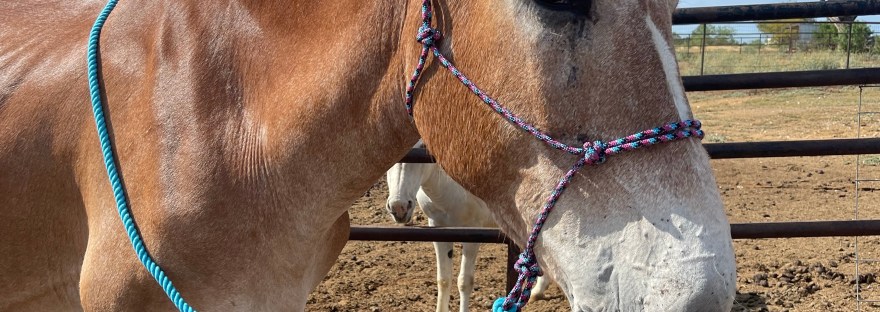
A lot of people wonder that, and I can’t blame them. Mules are usually viewed as funny-looking (or even ugly), stubborn, slow horses.
Some of those things can be true, at least subjectively. I find them beautiful, but obviously that’s very much in the eye of the beholder. And no, they’re not going to break any speed records (although there ARE exceptions, including the charming story of a mule named Lord Fauntleroy, who won the 3,500 mile Great American Horse Race in 1976).
As for being stubborn…that’s a little more complicated.
Before we get into that, let’s start by defining what a mule is. A mule is the offspring of a male donkey and a female horse. (In case you’re curious, the offspring of a female donkey and a male horse is called a hinny.) Nearly all mules are sterile, so you can only produce a mule by breeding a donkey and a horse.
So what’s the big deal? Isn’t a donkey just a small, fuzzy horse with long ears??
ABSOLUTELY NOT.
Donkeys look similar to horses, and they eat grass and hay like horses, but they’re VERY different animals. Most importantly, donkeys think and view the world in an entirely different way than horses do.
Let’s start with horses…
Almost all horse behavior is the result of being 1) a herd animal, and 2) a prey animal.
Horse herds always have hierarchies, and every horse is aware of exactly where he falls on the social ladder. Higher-ranking horses show their dominance by controlling the movement of the lower-ranking horses. Sometimes this involves chasing, kicking or biting. Usually, though, it’s much more subtle—pinned ears, tensed muscles, or even just a swish of the tail are enough to make the lower-ranking horse move away.
Most modern horse training methods are built on the same principle: controlling the horse’s movement to make him respect you as a superior. This is done by teaching him to yield to pressure—pressure of the legs, pressure of the bit, pressure of a rope, and even just the virtual pressure of dominant body language. (Don’t underestimate that last one! Although I definitely don’t recommend it, I’ve stopped more than one charging horse simply by stepping in front of him with an assertive stance and a commanding voice.) Pressure is the language they understand. And they’ll respond basically the same way regardless of who is applying the pressure, as long as it’s applied clearly.
The prey animal behavior kicks in when they get frightened. For millions of years, horses survived by quickly recognizing danger signs and immediately running away; and that flight instinct still exists in modern horses. It can be dulled through training and experience, to a certain extent. But, faced with something unfamiliar enough and scary enough, ANY horse will try to flee.
The point of the few paragraphs above is that horses make very few conscious decisions. Outside of their basic functions, like eating, drinking, exercising and socializing, the vast majority of their actions are either 1) moving away from some type of pressure, or 2) fleeing from danger.
And that’s NOT a bad thing, so please don’t think I’m slamming horses.
But donkeys are different.
Donkeys are THINKERS. Everything a donkey does is the result of a conscious decision.
When a donkey encounters something scary or dangerous, his behavior is the opposite of a horse. Instead of immediately running away, his instinct is to freeze and assess the danger. (He may THEN run away, but he’ll decide WHERE to run instead of just fleeing blindly.) But, depending on the nature of the threat, he may choose to stand and fight instead. The decision will be based on which option he feels is safer. That’s because donkeys have an incredible instinct for self-preservation. They’ll never voluntarily put themselves into a situation they feel might be dangerous.
And THAT is the root of the “donkeys are stubborn” myth.
Donkeys actually aren’t the least bit stubborn, in my experience. They just don’t blindly do as they’re told. That can look a lot like stubbornness if you’re used to dealing with horses and dogs.
So what happens if you try to train a donkey like a horse and expect him to yield to your pressure just because you said so? You get a donkey that simply shuts down and stops listening to you at all. I call that “rock mode,” because you might be able to push or pull him around at that point, but you’ll get the same response that you’d get from a rock.
Why does he do that? Because 1) he doesn’t trust you, 2) therefore, he can’t be sure that what you’re asking him to do is safe, and 3) you’re not giving him time to change his mind about 1 and 2.
To train a donkey to do anything, no matter how simple, you have to give him time to think and decide for himself whether he can safely do what you’re asking him to do. Sometimes a few seconds is enough. Sometimes it takes hours or even days. It takes as long as it takes, and rushing him will only reset the clock.
At this point you may be wondering why anyone would bother. But, thankfully, donkeys have some amazing upsides that can more than make up for their difficulties. For one thing, once they understand something, they never forget it. You don’t have to keep practicing like you do with a horse.
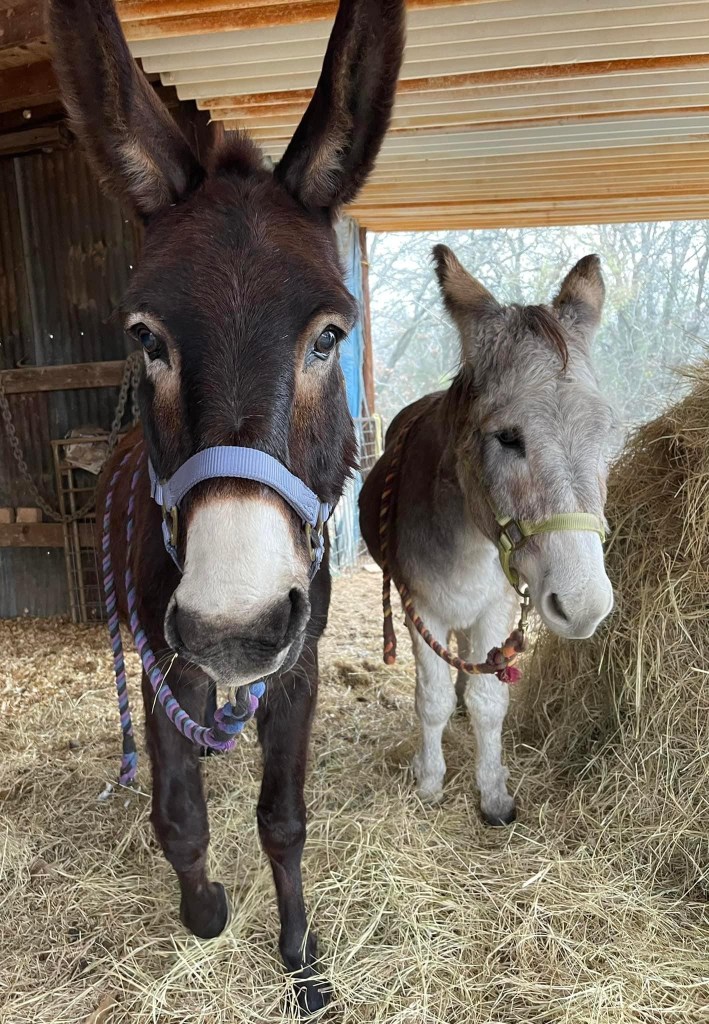
Example: The first time I tried to lead Jeep (my formerly feral jenny) into a barn, it took 30 minutes for her to take the six steps necessary to get her entire body inside. I let her look around for a couple of minutes while I praised her and gave her some treats, then we walked back out. On the second approach, she didn’t even hesitate—walked straight in, stopped in the same spot, then looked at me expectantly. (You can read more about Jeep here.)
The other big upside is that, because they’re so smart, it’s possible to develop very deep bonds with them. Once they trust you, they’re incredibly loyal and loving and affectionate, and they’ll do almost anything you could ask of them.
So what about mules?
It’s about time I finally get to that, huh?
So mules, as we discussed, are half donkey and half horse. And they managed to inherit most of the strengths of each side with relatively few of the weaknesses. They’re even superior to both parents in some ways!
Mules tend to get their size (and, to some extent, athletic ability) from the horse side, making them much more useful than donkeys for riding. But they get longevity from the donkey, often living significantly longer than horses. And they’re stronger than either parent, making them superior draft animals. They’re also healthier and hardier than horses, require less feed, and have more endurance.
Mules win on intellect as well, being more intelligent than both horses and donkeys. They have the donkey memory and sense of self-preservation, but they’re a little easier to train. And while they CAN spook like horses, they’re more likely to freeze and assess like a donkey would.
They also tend to be calm, friendly, and affectionate.
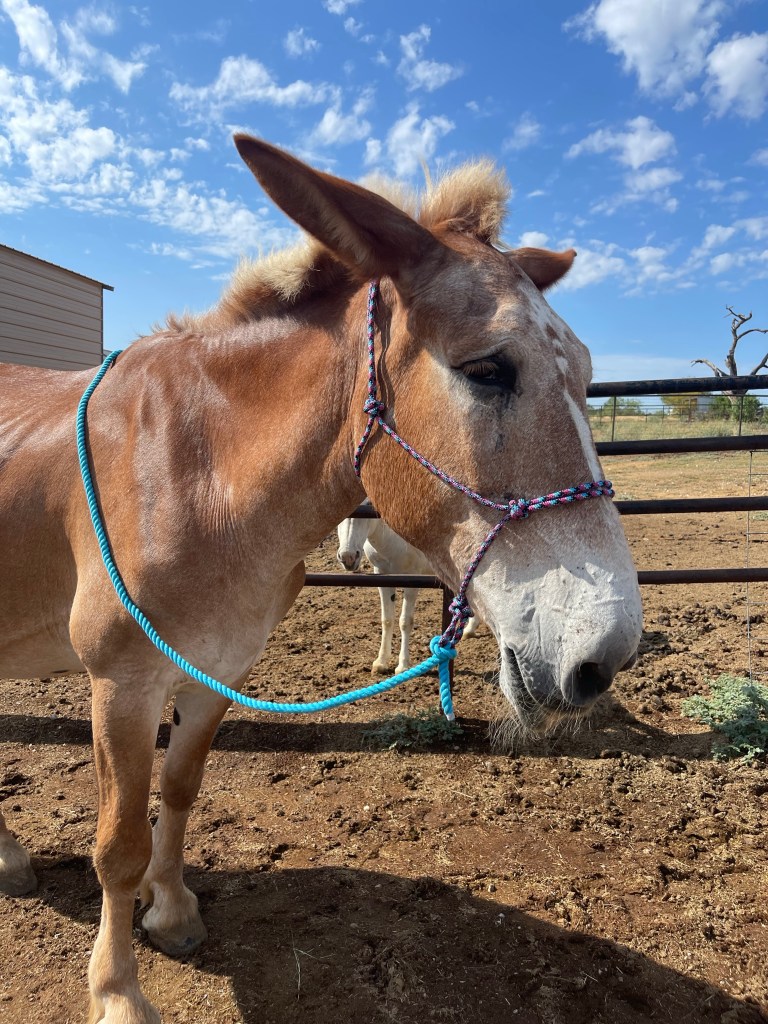
Horses were perfect for my younger self. They were the embodiment of grace and speed and beauty, and I couldn’t imagine anything better. But as my own grace and speed have faded, I’ve come to appreciate steady and slow, and these days I struggle to imagine anything more beautiful than my mule’s giant head, long ears and droopy lip watching for me over the stall door.

 The Midlife Mule